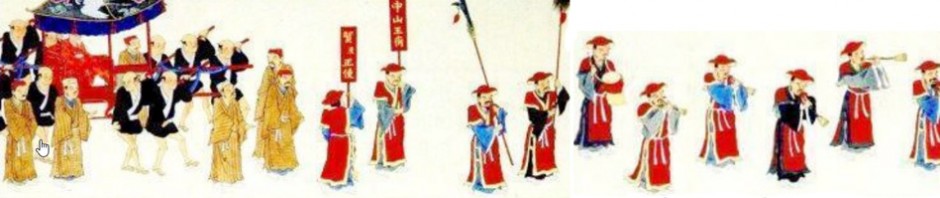

Click image for more information.
Click image for more information.
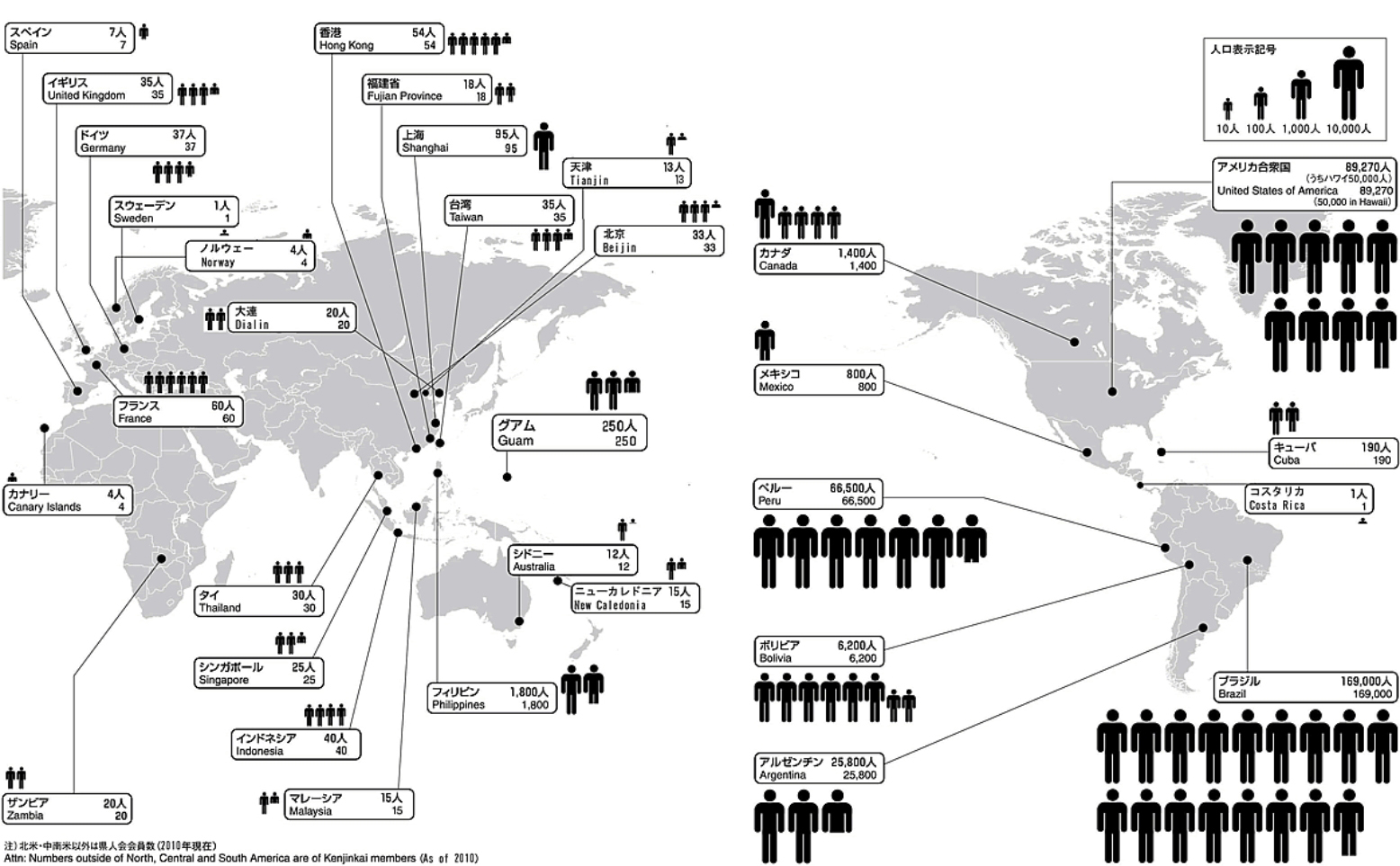
Source Oki-Ngo (NPO Okinawa NGO Center, 3-23-52 Ginowan, Ginowan City, Okinawa, Japan 901-2211). Apparently prepared for the 5th Worldwide Uchinanchu Festival in October 2011, “Let’s Study! The Worldwide Uchinanchu Project.” I’m not sure about the accuracy of the figures, how they were calculated, by whom, and when. Still, it provides an interesting starting point for further research and discussion. Click image to enlarge.
Updated 12/3/14

 ‘Map It!’ (by Louie) Sep/Oct 2014: The Legend of Nanga Bozu (10/30/14); The Naha Tug-of-War (9/29/14).
“A Film About the Uchinanchu People” (42 min) from the Secretariat of the 5th World Uchinanchu committee (Okinawaology Blog, 11/7/12). Uploaded to YouTube by Tom Corrao on 7/28/13. The 5th Worldwide Uchinanchu Festival was held in Okinawa on October 12-13, 2011.
Okinawaology (by Tom Corrao): Japanese Naval Underground Headquarters (8/22/13); Origins of the Ryukyu Kingdom by Tom Freeman (6/1/12); Okinawa’s Peace Memorial Park (5/9/12).
Okinawan at Heart (by Michael Schoonover): Ryukyu Kingdom after 1609: Social Classes and Genealogy (5/28/14); Ryukyu Kingdom after 1609: Central and Local Government Bodies (5/14/14); Ryukyu Kingdom after 1609: The King and his Central Government (4/30/14); Ryukyu Kingdom after 1609: Geographic Districts and the Tax System (4/16/14); The Okinawan Sweet Potato and Sugar Cane Save Ryukyu (4/2/14); Ryukyu Life After the Japan Invasion of 1609 (3/19/14); Ryukyu and King Sho Nei – Hostages of Japan (3/5/14); Japan Invades the Ryukyu Kingdom – 1609 (1/8/14).
Updated 12/3/14
Okinawa Hai is managed by Marie Lewis, and it features some of the best articles by people who are actually on the ground in Okinawa and writing about their own experiences in a style that’s informal, readable, informative, and fun. The following is a partial list of articles spotlighted on the site and retrieved on 11/16/14.
Ginoza Flea and Farmer’s Market, 11/10/14, by Anthony Camina.
Kumejima Island, Part 1. Kumejima Island, Part 2. Kumejima Island, Part 3. Kumejima Island, Part 4. 11/30/12-11/7/14, by Quentin Richardson.
Swim to Adaga Island, 10/10/14, by Will Miller.
Oodomari Beach (On Ikei Island), 10/6/14, by Kristin Little.
Shishimai (Lion Dance) Festival, 10/1/14, by Shell Burger.
Last updated 12/3/14

Governor Takeshi Onaga
Ryukyu Shimpo 11/16/14: Ex-Naha Mayor opposed to the construction of new US base wins Okinawa gubernatorial race
Asahi Shimbun 11/16/14: Onaga, opponent of Futenma relocation plan, set to win Okinawa governor election
Washington Post 11/14/14: As Okinawa prepares to pick new governor, U.S. military bases are on voters’ minds (by Anna Fifield)
BBC News 11/16/14: Okinawa US base move in doubt after governor elections
Reuters 11/16/14: Japan ruling party candidate loses Okinawa poll, setback for U.S. base move (by Elaine Lies)
Japan Update 11/16/14: Onaga to become next Okinawa governor

Click image to enlarge.
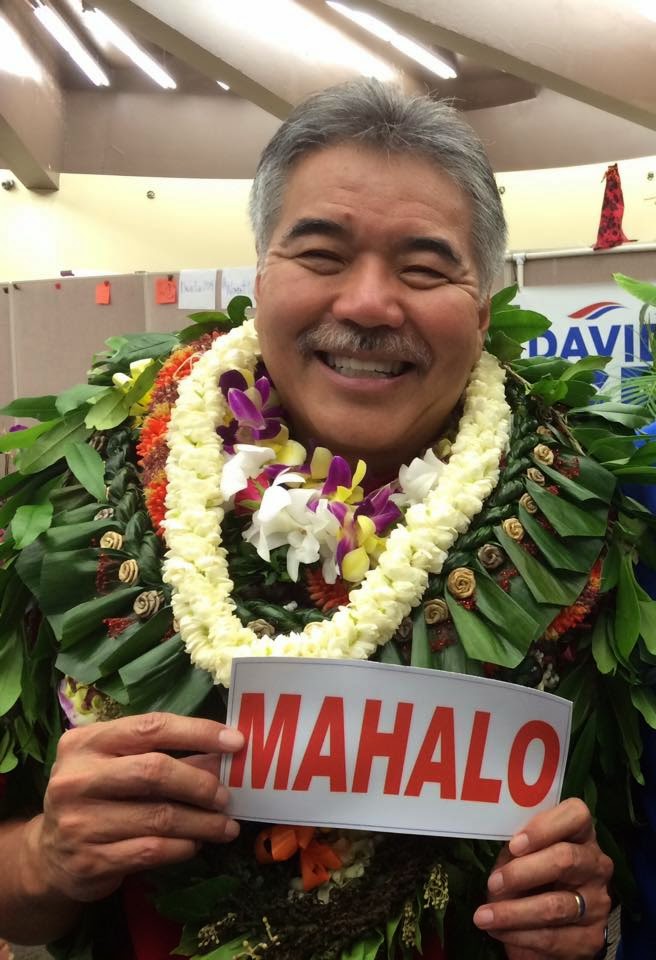
Star-Advertiser 11/4/14: Ige it is (by Derrick DePledge & Kristen Consillio)
Ryukyu Shimpo 11/6/14: Third generation Okinawan American Ige become new Hawaii Governor
Reuters 11/5/14: Democrat David Ige wins Hawaii governor’s race, MSNBC projects
LA Times 11/4/14: Hawaii: Democrat David Ige wins governorship in 3-way race (by Maria L. La Ganga)
Washington Post 11/5/14: Democrat David Ige wins governor race in Hawaii
ABC News 11/5/14: Democrat David Ige Wins Governor Race in Hawaii
Huffington Post 11/5/14: David Ige Wins Election For Hawaii Governor (by Samantha Lachman)

One day in Shanghai, we spent a few hours at the City God Temple shopping center looking around. We had finished a delicious multi-course lunch there in one of the restaurants and were waiting for our bus to come pick us up.
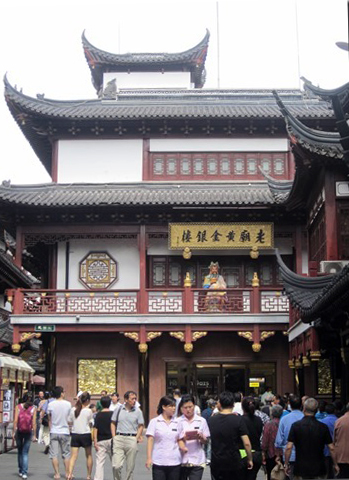
The City God Temple shopping center in Shanghai.
A short stocky guy about 5′ 3″ wearing a party mask came walking toward me on the sidewalk in front of the shopping center stores. He was selling party masks. He would blow air out from his nose, and the curled paper tubes would straighten out on both sides of his face while making a whistling sound. Funny sight. Was he a clown? Or trying to act like one? People watched as he passed, but nobody would buy.
He sat down on the steps, took the mask off and wiped the perspiration from his face. It was obviously uncomfortably hot under the mask. But his face took me by surprise. He didn’t look Chinese at all. This guy looked like a true blue Uchinanchu (Okinawan)! He had thick black eyebrows, a wide face, a head of black hair slightly balding at the top, and a sorta dark complexion similar to many Okinawans I know in Hawaii and Okinawa. I looked at his forearms, and they were hairy like mine. Continue reading
Source: “Descent into Hell: Civilian Memories of the Battle of Okinawa by New Zealand translators published in US,” Ryukyu Shimpo, 7 Oct. 2014.
Descent into Hell: Civilian Memories of the Battle of Okinawa, published by Merwin Asia, is a translation by Mark Ealey and Alastair McLauchlan of Ryukyu Shimpo‘s 1983-1985 series “Senka o Horu” (“Digging Up the Ravages of War”).
Blurb from the University of Hawaii Press:
Concerned about the need to record and explain the experiences of Okinawans caught up in the Battle of Okinawa, in 1983 the local Ryukyu Shimpo newspaper carried out several hundred interviews with survivors. With explanatory comment added, this was published first in serial form, then later as a book. More often than not talking in detail about their experiences and visiting the caves and shelters where they spent weeks on end as the U.S. bombardment destroyed everything above ground was a cathartic experience for those who came forward to tell their stories.
The Battle of Okinawa affected every resident in some way. Ten of thousands of Okinawans were killed in the relentless bombardment by U.S. forces, ten of thousands more local recruits died in Home Guard units, thousands died of starvation and malaria in places away from the fighting, hundreds of young students died in the Blood and Iron Student Corps or as nurse’s aides tending to wounded soldiers in hospital caves, and hundreds of evacuees lost their lives in ships sunk by American submarines or aircraft. There were even people who took their own lives, or the lives of loved ones, to avoid what they had been told by the Japanese Army would be a far worse fate at the hands of their American captors. Descent into Hell is the story of this apocalyptic struggle as told by those Okinawans who survived.
250pp. November 2013
ISBN 978-1-937385-26-2 paperback $35
ISBN 978-1-937385-27-9 cloth $75
[Source]
Registration from Nov 1, 2014 to Dec 10, 2014
Okinawa Marathon Executive Office
2-17-14 Uechi Okinawa City
Okinawa Japan
Phone: 098-930-0088
Homepage: http://okinawa-marathon.com/eng/
The Okinawa Marathon runs through different cities, towns, and villages in central Okinawa. The marathon aims to encourage people to enjoy running and increase their fitness level throughout Okinawa. The Marathon Race Committee hopes that this marathon will promote international and inter-cultural exchange,too. The committee also hopes it will add to your memorable experiences while on Okinawa.
Race date: Sunday,February 15th, 2015
[Full Marathon] Race starts at 9:00am. Race finishes at 3:15pm.
[10km Road Race] Race starts at 9:40am. Race finishes at 11:00am.
*There are four cut-off points on the full marathon course.
The title of this YouTube video is “ミルクムナリ (Mirukumunari), Vancouver Okinawa Taiko, 2014 Chinese New Year Event.” It was uploaded by Okipri14 on 2/3/14. Description: “Feb.02, 2014 Okinawan Drum Dance performance for Chinese New Year Event at Landsdowne Center in Richmond BC Canada.”
 By Elizabeth Shimabukuro
Yesterday I was able to take James with me to the Okinawa Association of America’s Annual Bazaar in Gardena, CA. The vendors and performance stage were in the parking lot. The dining room, which served soba, was also open to the festival goers. The photos below are of the dining room where they had a donor plaque on the wall, and I saw a “Masao Shimabukuro” from Okinawa as one of the more prominent names. I know it’s a very common last name, but I wonder if we are related somehow?

Dining area, serving Okinawan soba.
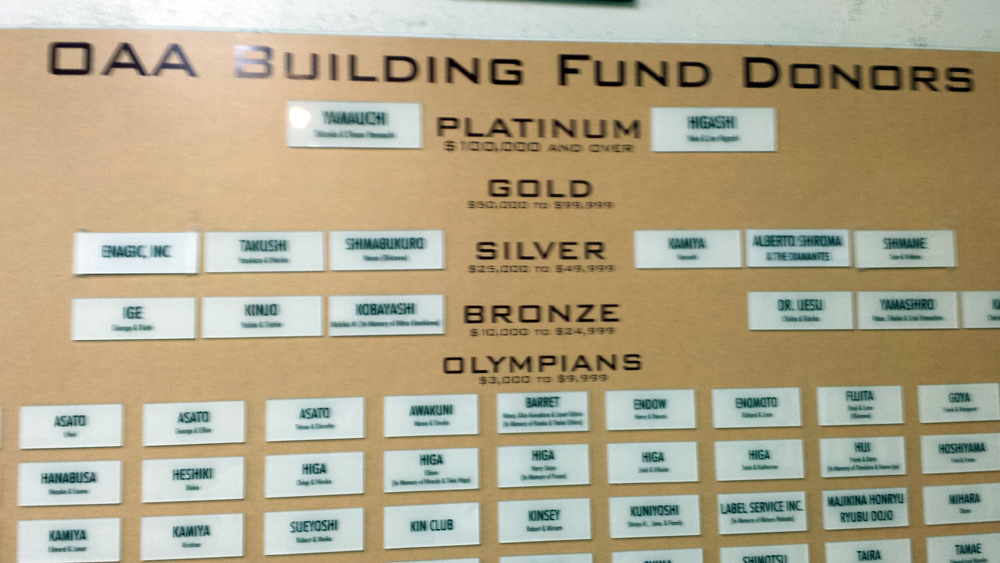
Donor plaque.
The photos below are of the performances. They had the stage set up at one end of the lot so you could easily browse the vendors, pick up a snack, and make your way over to watch the entertainment. The eisa performance was put on by an elementary school with a Japanese language immersion program. It was really cute. To introduce their performance, a little girl first gave the intro in Japanese. She was an expert and spoke way too fast for me to pick up any of the words. LOL! Then a little boy repeated it in English. It was also really funny to watch the little kids drumming and doing their “moves” – some had great rhythm, others not so much.

Eisa performance.
The karate demonstration was a small group of four kids from a local club, and I think the minyo performance was part of the Okinawa Association of America, but I’m not sure. The performance area was covered by large tents with plenty of shaded seating, but most of it was saved (and unoccupied!) so we stood in the back and watched a few performances while we ate shaved ice, manapua, and iced coffee.
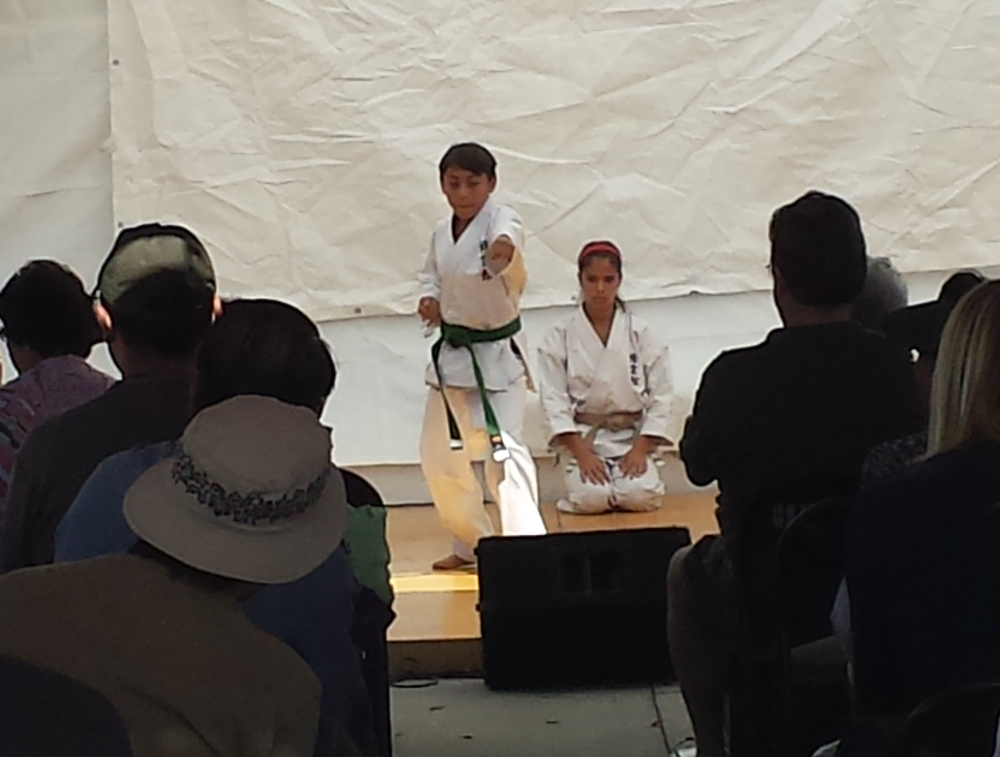
Karate demonstration.
Last updated 10/13/14
One day my Dad made a sketch of Uncle Hoso’s house in Oyakawa Village in Haneji, Okinawa. (See “The Floor Plan of Houses in Old Okinawa.”) On another day he took a notepad and sketched an elevated Okinawan storehouse. (See below.) Then he told me that Uncle Hoso Inafuku owned two elevated storehouses: one in front of his house in Oyakawa and one in nearby Taira Village. He says when he lived with Uncle Hoso during the early 1920s, the first thing he used to do after waking up was go out in the front of the house and pee on the cherry blossom tree next to the storehouse.
My Dad said one day he and his Oyakawa pals went into Uncle Hoso’s elevated storehouse in Taira to play around and eventually ended up falling asleep there. He doesn’t know how Uncle Hoso knew, but he came and chased them out. After 85 years, my Dad still shook his head, “How da heck did he know we were in there?”

My Dad’s sketch of an elevated Okinawan storehouse in Oyakawa Village in Haneji.
After my Dad made the storehouse sketch, I got home and took George Kerr’s book, Okinawa: The History of an Island People, out and thumbed through it. I was stunned when I came upon the drawings of the elevated storehouses (see below) on page 28. “Holy Toledo! The one on the right looks just like the storehouse my Dad drew!” He never heard of Kerr or his book. He makes the sketch and then I find a picture like it in Kerr’s book. Is this the Twilight Zone?

Drawings of elevated storehouses on page 28 of George Kerr’s Okinawa: The History of an Island People.
The note below the storehouse pictures says “Haneji Village.” I wonder if Kerr was referring to Uncle Hoso’s two elevated storehouses in Haneji. If you look at the Okinawa map, you can see that Nakijin, Motobu, and Haneji are all next to each other. I wonder how many elevated storehouses were in that area? The famous Churaumi Aquarium with the huge whale sharks is located in Motobu. Continue reading
 Last updated 10/12/14, 11/29/18
Two and a half years before Commodore Matthew C. Perry arrived, George Smith, the Anglican bishop of Hong Kong, dropped anchor at Naha, Okinawa. The date was 3 October 1850, and Perry wouldn’t arrive until 26 May 1853. Smith’s mission in Naha was to look into the welfare of Bernard Jean Bettelheim, a British subject, a medical doctor, and the contentious Protestant missionary who occupied the Gokoku-ji temple in Naha and remained on the island against the wishes of the Okinawan authorities.
Smith was unimpressed with the natives. “In both sexes,” he says, “there was a remarkable absence of everything associated in a European mind with the idea of beauty.” He describes a caste system in which the lowest are treated as slaves. Throughout, he claims that the Okinawans are essentially Japanese. He says, “Their features, partaking of a strong Mongolian cast and figure, are very different from the Chinese, and their great resemblance to the Japanese proves that the blood of the latter race predominates in their veins.”
Before Smith left, he received an “urgent petition” from “Ma-Leang-tsae (and others), the vice-governor-general of Lewchew, entreating his excellency to look down in compassion, and take away Bettelheim and his family to his home, that our little country may be at rest.”
The gist of the petition is strikingly familiar today, 160 years later. Bettelheim back then was the equivalent of American military bases today. The Okinawans want them out. They want to be free of forced relations.
Much of what was true then is true today. Okinawa is poor and hardly deserves being called a kingdom. Its primary occupation is subsistence, and it has little to offer other countries. Attempts to trade and interact with Okinawa place a tremendous burden on the kingdom’s limited resources.
The petition ends with a plea: “Look down in pity upon us; cease to send people to remain here; and desist from the attempt to trade with us and to teach us Christianity. Thus the whole country, government officers and people, will be thankful for ever.”
In 1854, the Okinawans were finally free of Bettelheim when Perry took him aboard his ship. In 2014, the Americans are entrenched even deeper in Okinawan soil, and the people are again urgently pleading for them to leave.
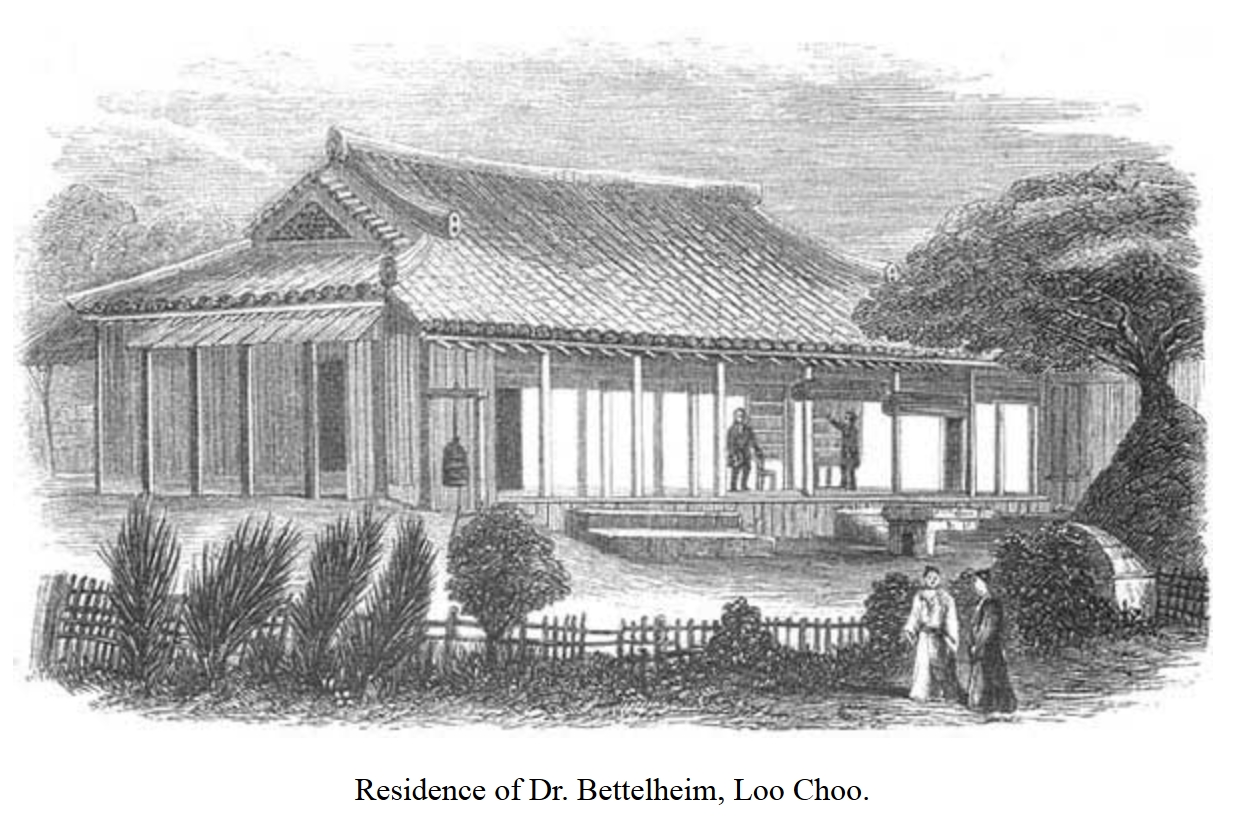 The excerpts below are from Smith’s account of his voyage, Lewchew and the Lewchewans; Being a Narrative of a Visit to Lewchew, or Loo Choo, in October, 1850 (London: T. Hatchard, 187, Piccadilly 1853).

Bishop George Smith
St. Paul’s College, Victoria, Hong Kong,
July, 1852.
At the present time Lewchew is the only avenue to Japan, the nearest part of which is only three hundred miles to the north-east. A mission to the former is in effect a mission prospectively to the latter country also. Present appearances indicate a probability that an unwonted effort will be made ere long by the United States to open Japan to foreign commerce. In such an event, a mission establishment at Lewchew would at once supply a body of linguists, already prepared and ready to enter upon this last remaining of the countries of the East at present debarred from intercourse with Christendom.
On Monday, September 23rd, 1850, I embarked at Hong Kong, in H.M. steam-sloop, the Reynard, which had been placed under orders by the naval commander-in-chief on the station, to convey me, on my first episcopal visitation, to the consular cities in the northern ports of China.
The wind changing to a fresh N.W. breeze, enabled us to run on in a direct course, and on October 3rd, we came in sight of the great Lewchew Island. A long chain of low coral islands stretches about twenty miles outside, and guards the approach from the south-west. We pursued our intricate course under steam, through the numerous islets and coral reefs, and came to anchor in the outer harbour of Napa, situated on the south-west extremity of the island. Continue reading

Click here for a map.
From Eric
Forwarded by Rodney Inefuku
Gusuuyo Chuuganabira!
Aki natoibiishiga nama nu wa-chichi madamada achisaibiin!
Its Autumn now but the weather is still hot!
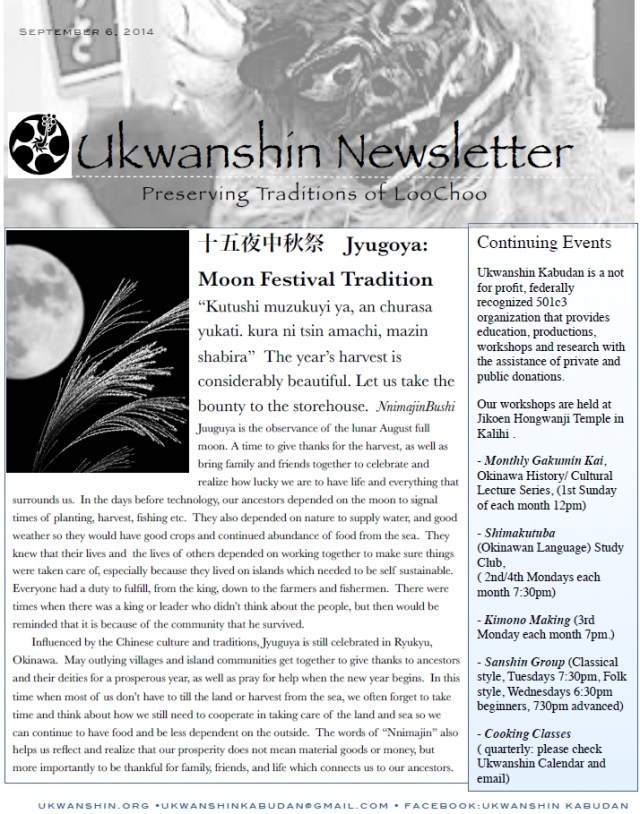
Chaaganjuu yamiseemi? Chigi nu Getsuyoubi ya shimakutuba gakumun kai aibiigutu, imensooriyo-sai!
Hope you are all doing well. This is just a reminder for Shimakutuba Gakumun kai this coming Monday at 7:30pm at Jikoen. For those of you who have been in break, hope to see you this coming week. We will be continuing our work on putting together more dialogue to get used to using shimakutuba in everyday conversation.
Don’t forget to let others know and bring them with you! For those of you off island you can join us via live streaming video on upstream “ukwanshin”.
Yutasarugutu Unigeesabira!
Eric
Last updated 10/11/14
From Joyce N. Chinen:
(Forwarded by Rodney Inefuku)
Please join us this Sunday, October 12, at 3:00 pm for the next Center for Okinawan Studies public lecture in Moore 319 at the Center for Korean Studies Auditorium [University of Hawai’i at Manoa]. Guest Lecturer will be Robert Walker, author of the recently published guidebook, Okinawa and the Ryukyu Islands (cover shown below), will be speaking on “Contemporary Life in Okinawa: Living among and with the Military Bases.” Parking is free.
Joyce N. Chinen, PhD
Center for Okinawan Studies
School of Pacific and Asian Studies
University of Hawai’i at Manoa


Continue reading
Hi Folks!
Fun event coming this Sunday. See below.
I see Grant Sundee Murata in the picture below – center back row, looking so serious. I met Grant at Ward Centre Marukai a coupla months ago. Really down-to-earth good fun guy da buggah.
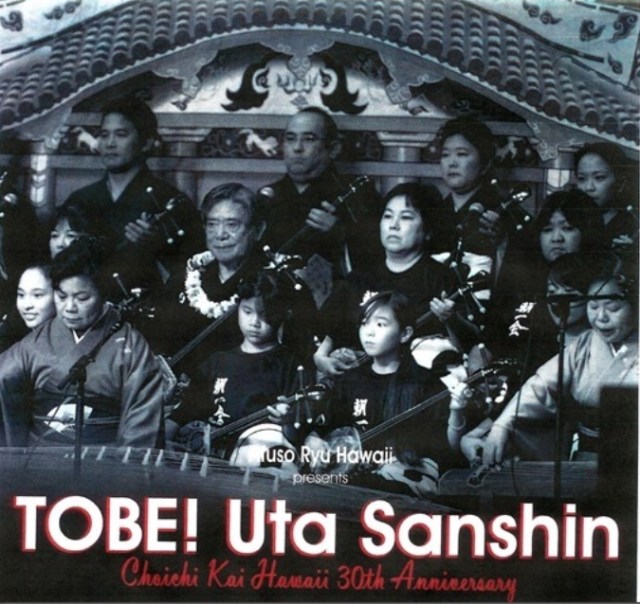
Grant Sundee Murata – center back row.
Told him I saw him on Youtube making andagi on Sam Choy’s show.
“I like da way you squeeze da baddah from da hand into da boiling oil… and you neva measure da flour fo make da baddah. Just keep pouring and mix until get da right consistency.” He just laughs. “No can just follow da recipe… no goin come out right.” (Da buggah speak pretty good pidgin.) So we just stood around in the aisle blocking people trying to walk by and kept talk’n story for about 45 minutes. Good fun was!
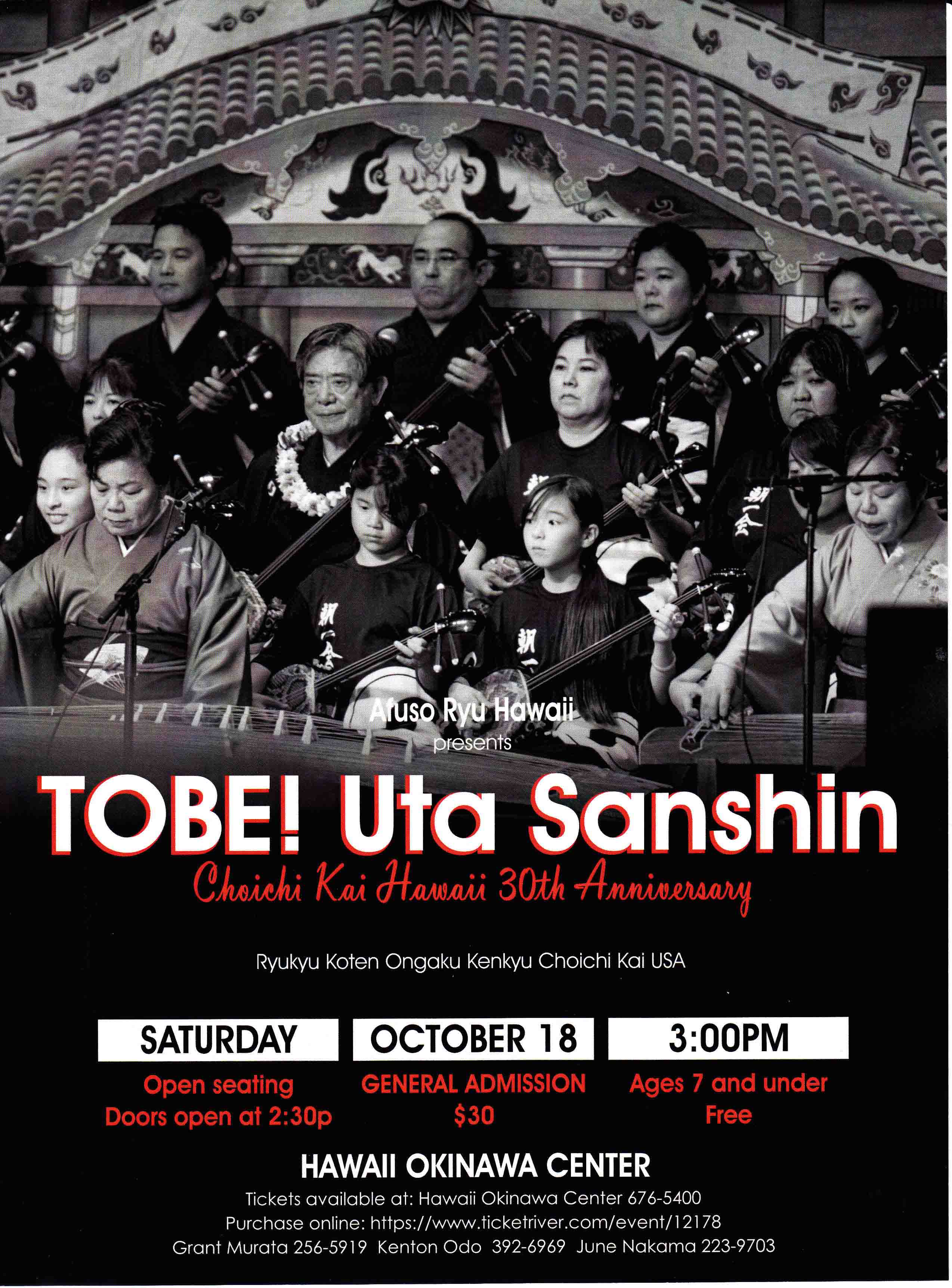
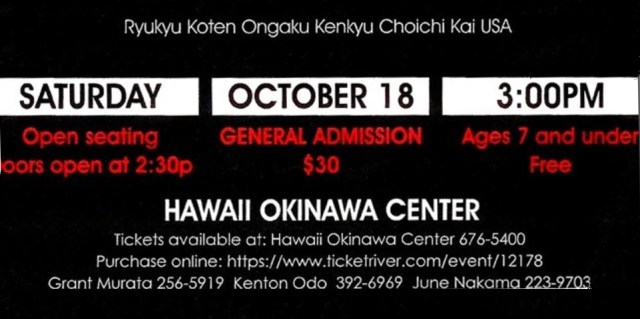 From Joyce Chinen: Afuso Ryu Gensei Kai Hawaii Shibu (the Afuso Ryu School) will be celebrating its 30th anniversary in the islands with a performance at the Hawaii Okinawa Center. Special guest will be National Living Treasure, Terukina-sensei. Please see flyer for additional information.
Joyce N. Chinen, PhD
Center for Okinawan Studies
School of Pacific and Asian Studies
University of Hawai’i at Manoa
Last updated 10/5/14

Lawrence Downes. Photo from his Twitter page.
The excerpts below are from Jerry Kammer’s “Sulzberger’s Voice.”1 Kammer, a nationally recognized journalist and a senior research fellow at the Center for Immigration Studies, is openly critical of Downes, but he provides essential background on Downes and his passionate advocacy for illegal immigrants and the disenfranchised. In “Island Records,”2 an article written a couple of years ago, Downes describes Okinawa as “the place where my maternal grandparents were born but which I had never seen.”
Excerpts from Kammer’s “Sulzberger’s Voice”:
[Downes’s] maternal grandparents were Okinawan and his father a Caucasian from New York — Downes has written movingly about the complexity of being mixed race —”hapa” — in Hawaii, where he grew up. “Dwelling on it can tie a person in knots,” he wrote. “It can be disorienting to feel forced to choose between identities when you are both and neither. It can be infuriating to be stared at by people trying to puzzle out what you are.”
On immigration Downes is the go-to guy. His most passionate cause is the defense of illegal immigrants. He is their defender and advocate. He is the voice of Arthur Sulzberger. “In truth, our biggest domestic menace never was waiting outside Home Depot, hoping to clean your basement,” Downes wrote in 2009. “Unauthorized immigrants are not about to destroy anything, not even when they get angry and loud and march in large groups. On the contrary, they are inspiring. Their ethic of self-reliance and hard work is one that Americans should recognize and celebrate.”
In a recent NY Times editorial3, Downes took up the homeless issue, focusing on his hometown of Honolulu. He writes:
In Honolulu, a city that combines an insanely high cost of living with a dire lack of apartments, a significant segment of society has no permanent place to live. A state representative there thought he would help matters by using a sledgehammer to destroy homeless people’s shopping carts. That did not work. Continue reading
The text of the compact below is from J. Willett Spalding’s The Japan Expedition: Japan and Around the World: An Account of Three Visits to the Japanese Empire, Redfield, New York, 1855: 339-341 [https://archive.org/details/japanexpedition00spalgoog]. Spalding served aboard the expedition flagship, USS Mississippi, a steam-driven paddle frigate. Commodore Matthew Perry headed the expedition.

Loo-Chooans, from The Japan Expedition, page 113.
Compact between the United States and the Kingdom of Loo-Choo, Signed at Napa, Great Loo-Choo, the llth day of July, 1854.
Hereafter, whenever citizens of the United States come to Loo-Choo, they shall be treated with great courtesy and friendship. Whatever articles these persons ask for, whether from the officers or people, which the country can furnish, shall be sold to them; nor shall the authorities interpose any prohibitory regulations to the people selling; and whatever either party may wish to buy, shall be exchanged at reasonable prices.

Perry at Shureimon, the entrance to Shuri Castle, June 6, 1853.
Whenever ships of the United States shall come into any harbor in Loo-Choo, they shall be supplied with wood and water at reasonable prices; but if they wish to get other articles, they shall be purchasable only at Napa.

Reception for Commodore Perry at Shuri castle.
If ships of the United States are wrecked on Great Loo-Choo, or on islands under the jurisdiction of the royal government of Loo-Choo, the local authorities shall despatch persons to assist in saving life and property, and preserve what can be brought ashore till the ships of that nation shall come to take away all that may have been saved; and the expenses incurred in rescuing these unfortunate persons, shall be refunded by the nation they belong to. Continue reading
Last updated 10/13/14
My curiosity about the old Okinawan house began with a drawing that my Dad made about 2 to 3 years before he passed away. While visiting him at his house, out of the blue, he took my ball pen and a sheet of paper and sketched the floor plan of uncle Hoso Inafuku’s house in Oyakawa village in Haneji. This was where he stayed as a young lad of 8 years back in 1921 for 2 1/2 years. Here is his sketch:
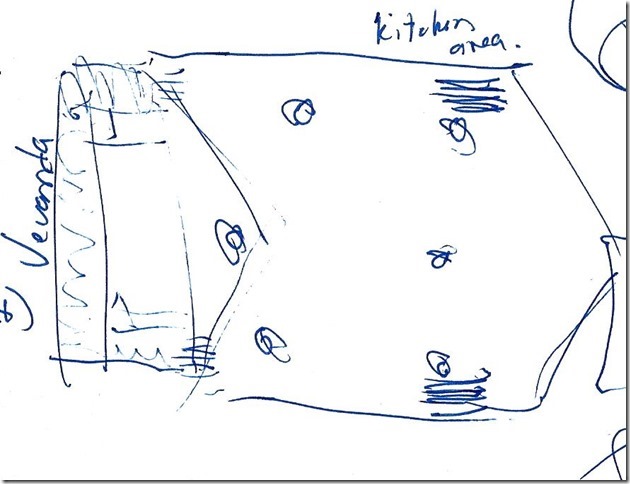
When I first looked at it, I was totally confused. Where were the doors? There were no doors. Where were the rooms? There were no rooms. What were those little circles? They were wooden posts to hold up the thatched roof. What were the horizontal scratches at the corners of the house? They represented sliding doors. When the day began, you would slide the doors to the corners and vertically stack them side by side at the corners to create an open and well-ventilated living space. In the evening, you would slide the doors back into place to form a wall around the room.
My cousin, Yasuo Inafuku, sent me the picture below of his house in Taira village. It shows the front of his house. He told me that his house was used as an orphanage right after the war, so I believe it was built before WWII. Today, he still lives in this house. When I visited, I could see that it was old — but very solid. As you can see, it is rather large. There are the wooden sliding doors stacked at the corner and the wooden posts. Yasuo told me that people have come to him over the years wanting to buy his house. He declined their offers. But someday he may have to give it up, he says, since the skilled craftsmen who could repair houses like this are all fading away.
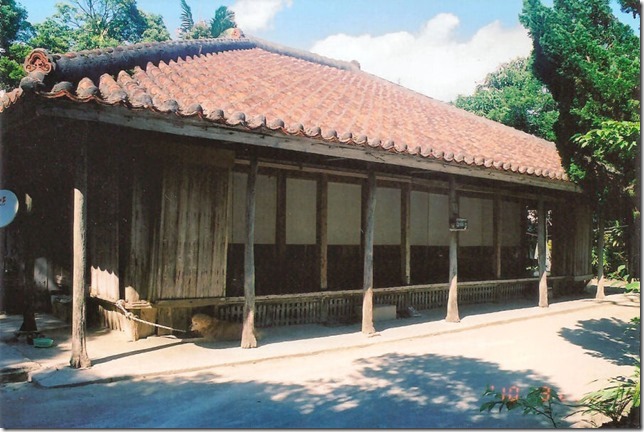 Here is a map of Okinawa, so you can see where the various houses in the Ryukyu Mura cultural village below came from.
 On our last day in Okinawa several years ago, we visited the Ryukyu Mura cultural village in the Onna district. I took pictures of the Nakasone house because I was quite surprised how similar it was to my cousin Yasuo’s house. See the photo below. This is the front of the Nakasone house. What I found out about the old Okinawan houses I looked at, unlike the homes in our country where most are so different from one another, is that the ones in Okinawa all pretty much followed the same floor plan.

From this view, you can see that the front part of the house is divided into 3 rooms. The kitchen is on the left side in back or part of the front left room. The left room is normally used as the dining room. The room in the middle is usually reserved for the family shrine, and the room on the right is used either as a study room or a bedroom. From the houses I looked at in Ryukyu Mura village, I learned that all followed the same floor plan.
Why? I wonder. Was it decided a long time ago when they first started building these houses that following this floor plan yielded good fortune? Perhaps this was like the Chinese following Feng Shui principles when designing their houses? Continue reading
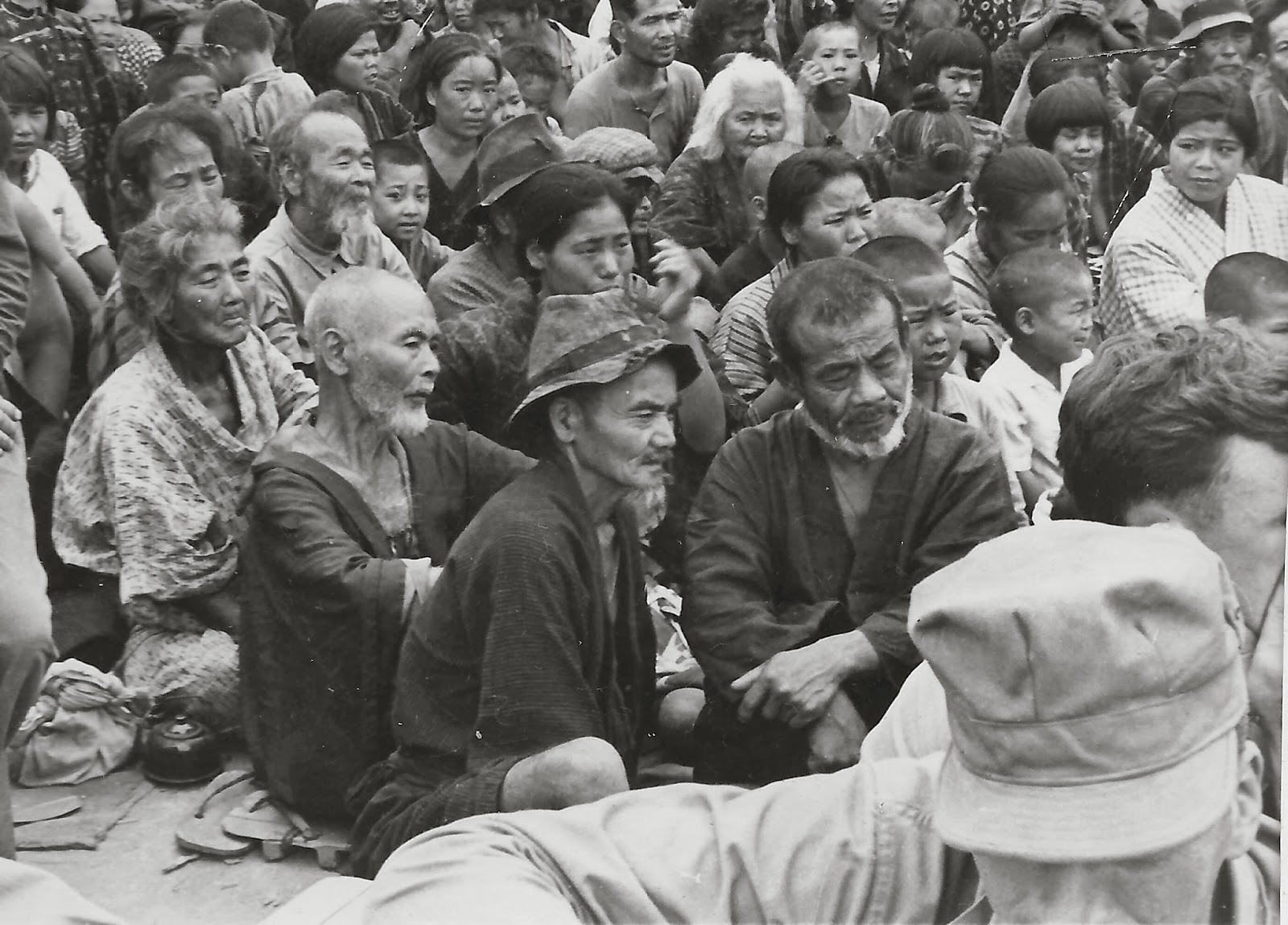
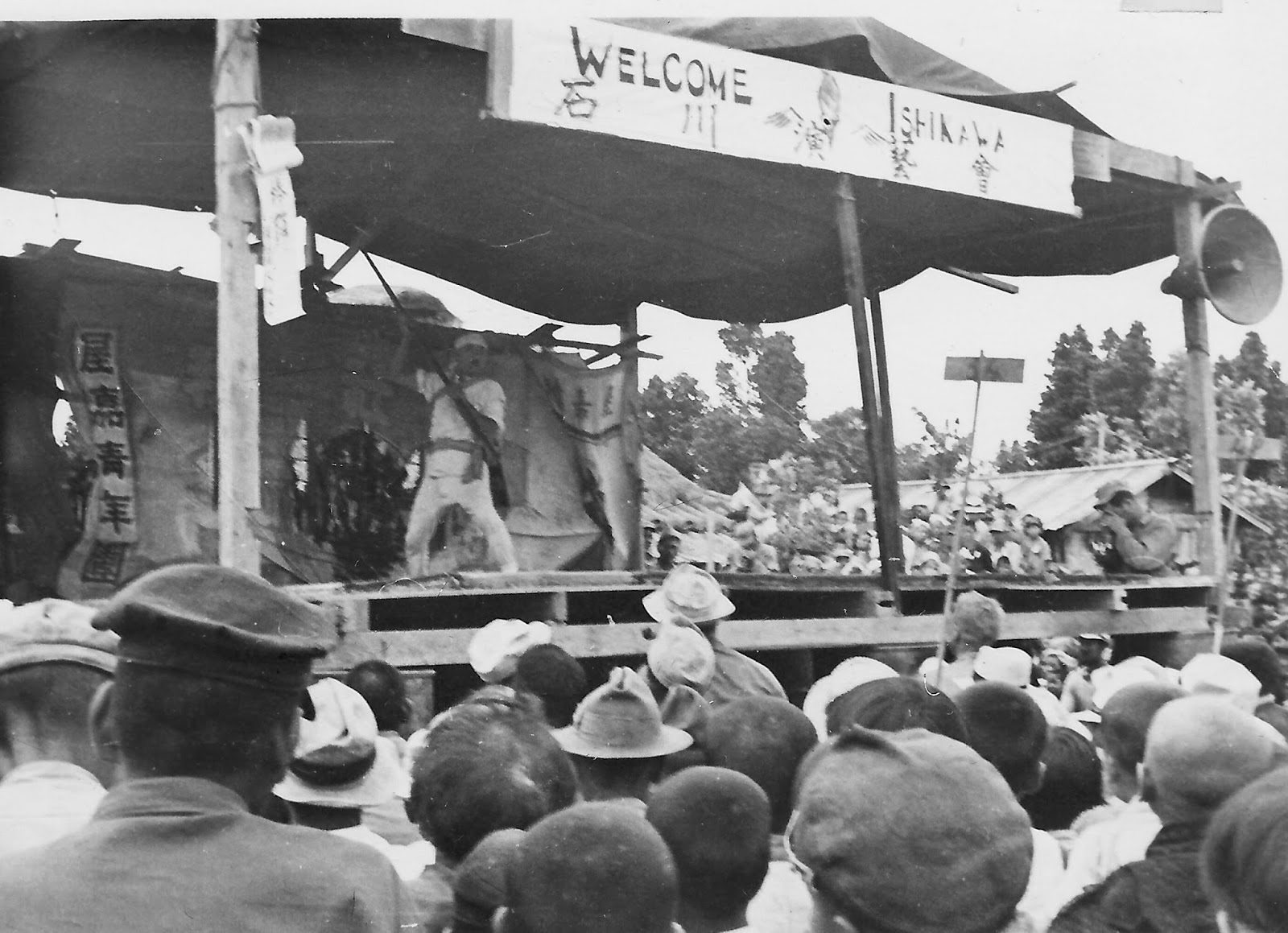
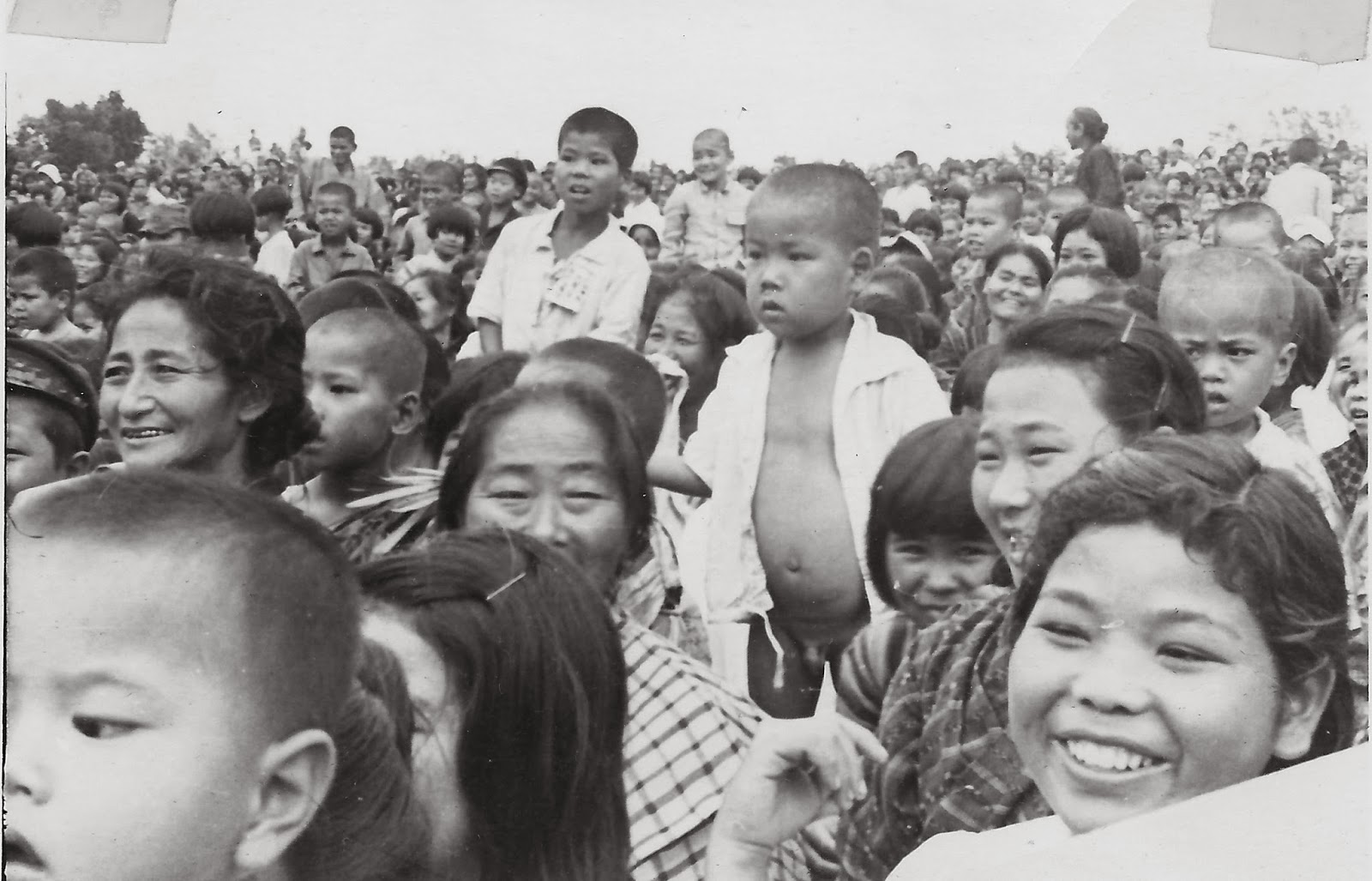
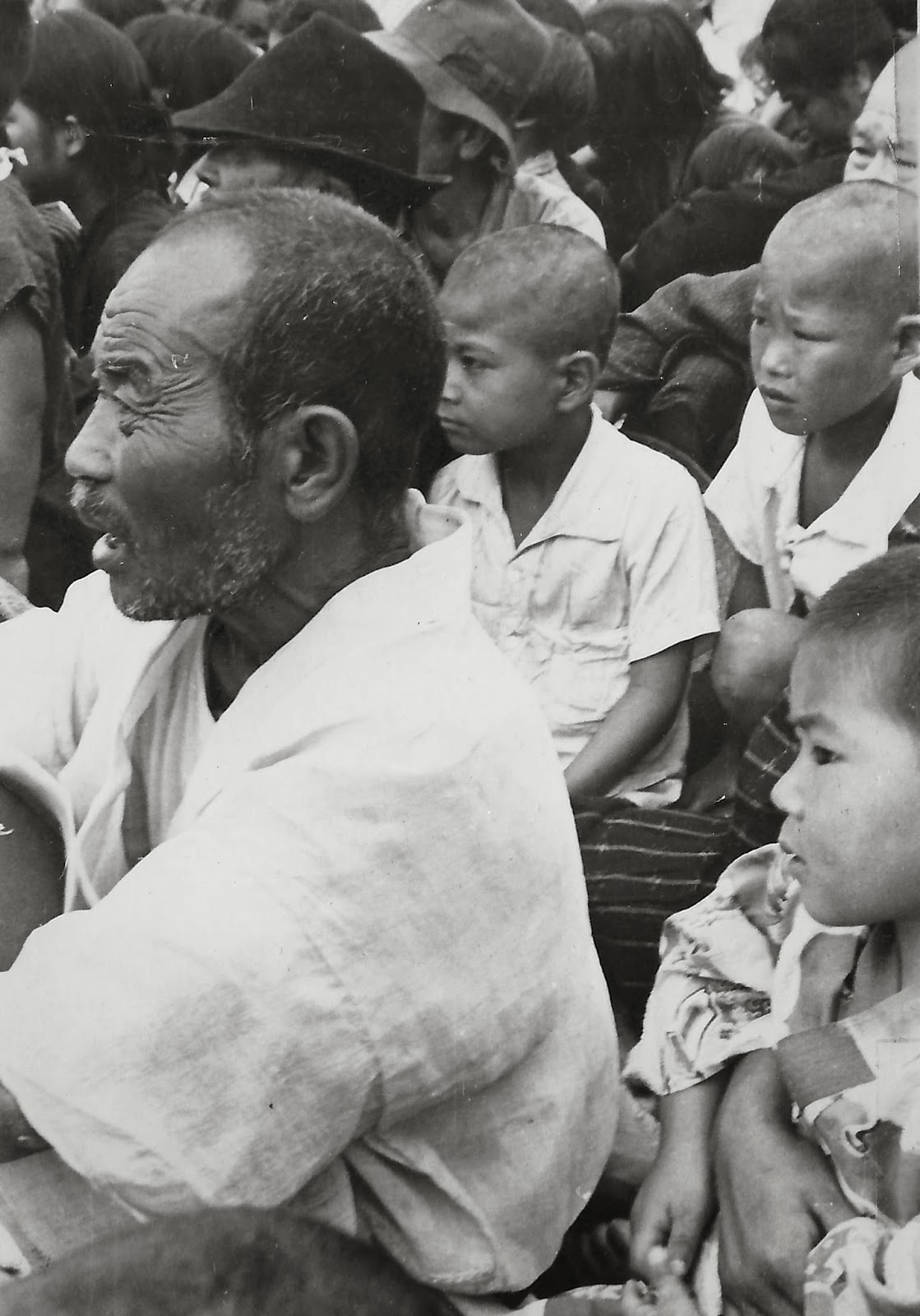
The following photos of civilians caught up in the turmoil of the Battle of Okinawa in 1945 are from the late Lieutenant Reinhart T. Kowallis’s collection. Most were taken by the Lieutenant, but some may have been taken by other servicemen. He served for a year in the Pacific during World War II, including the Battle of Okinawa. These photos are being shared through the kind permission of his son, Bart J. Kowallis, Associate Dean and Professor, Department of Geological Sciences, Brigham Young University, Provo, Utah. According to Bart Kowallis, his father “was fascinated by the civilians in Okinawa,” and this, I believe, is the quality that emanates from these rare glimpses into the lives of ordinary Okinawans during an extraordinary period in their lives.
These 25 photos capture the spirit of the people, their will to go on despite unimaginable loss and suffering. The photos are a connection between the photographers and their subjects, between one human being and another, and that connection is reflected in these timeless images as warmth, respect, and caring. In a recent email to me, Bart Kowallis wrote, “I am also trying to compile a book of the letters my Dad and Mom wrote to each other during the year that he was in the Pacific. They wrote to each other almost every day, so it has been a sizable project. I am using some of the photos in the book.” The following photos and many others, including some of the Lieutenant’s letters, are posted in Dr. Kowallis’s Urthman’s Genealogy Blog. He is planning to add more photos when time permits.

RT Kowallis Collection 1945 001
RT Kowallis Collection 1945 002
RT Kowallis Collection 1945 003
RT Kowallis Collection 1945 004
RT Kowallis Collection 1945 005
Last updated 10/3/14
George Feifer’s article appeared in the February 2012 issue of Collier’s. Here are some excerpts:
 Starting with elementary facts about the largest land-sea-air battle in history may make sense because they’re so little known. Or approximation of facts, since the number of Okinawan civilians killed in 1945 will never be known, the three months of battle for their once famously peaceful, traditionally submissive island having destroyed virtually all records together with almost every building of significance. The best estimates put the death toll at slightly less than 150,000, roughly a third of the population. The 2,350 deaths at Pearl Harbor weren’t the same 33 percent of American lives but .00002 percent. Proportionately on 9/11, it would have been not 3,000 of us killed but more than 90,000,000.
Giving a low priority to civilians, our infantrymen began firing indiscriminately at houses, their occupants, and anything else that moved. Of course no one can blame our exhausted, sensibly terrified combat troops, but the results were gruesome.

Okinawans’ ghastly lesson from World War II was that far from protecting them from anything, foreign military bases on their island invite devastation from other foreign powers determined to destroy them. That’s why the tanks, planes, and howitzers our forces proudly park at the gates to our bases there make them shudder rather than breathe easier.
The Okinawa that was innocent, except for the compulsory service of some of its men in the Japanese army, paid a vastly greater price for World War II than did mainland Japan.
Mainland Japan, which doesn’t want American bases on its land, shunts more than half of them to Okinawa’s 0.6 percent of Japanese territory. [“Mayor Inamine explained that Okinawa only made up 0.6 percent of Japan’s total land area, but had about 74 percent of the American military bases in Japan.” Ryukyu Shimpo, 9/18/14.]
Okinawa, being the poorest of Japan’s 47 prefectures and its people being the continuing subject of racial discrimination, has too little political clout to make Tokyo honor its promises. And we’re complicit in Japan’s policy and practice of injustice in the bases issue.
America helped lower the quality of Okinawan life because most Japanese treated the racially mixed people a little like American whites of the time treated American blacks.
The beautiful sub-tropical landscape had become, as an Okinawan survivor put it, a vast field of mud, lead, decay and maggots. The tombs of their ancestors, on which their religious life had centered, were among the ninety percent of structures that had been blasted to rubble and dust.
The battle of Okinawa never ended in the sense that American forces remain on the site much against the majority’s will. Mile after mile of our bases, almost all of them on the flat, tillable land that has always been scarce on the mountainous island, disfigure territory and lives alike. Ugly barbed-wire fences are evidence that we’re behaving there in direct violation of our belief in truth, justice, and decency. Our actions there, which have a disturbing resemblance to George III’s treatment of the American colonies, are hard to defend without ignoring all considerations except narrowly military ones, and not even all of those.
A visit to the island and tour of some of our 38 land-hogging facilities may well pose the question of whether our military establishment and thinking are making us the people we want to be. Even if you don’t get to know extremely courteous Okinawans long enough for them to open up about their wish to be free, it may well also prompt shame. Of course they have their share of lotus eaters and money-grubbers who want more of the money bases earn in ground rent, now paid almost entirely by Tokyo, and the takings of bars and cafés. But I won’t apologize for repeating that the majority wants nothing more than to be left in peace.
Read the full article on the Collier’s site.
Last updated 10/1/14
Umushirikutu

Ryota Shimabukuro, “Event introducing Okinawan literature held at US Library of Congress” (Ryukyu Shimpo, 9/14/14): On September 9, an event introducing Okinawan literature titled “Living Spirit” was held at the US Library of Congress in Washington D.C…. The event started with the introduction of prominent Okinawan literary works by Prof. [Frank] Stewart [University of Hawaii] who summarized them in English. [Katsunori] Yamazato [Meio University] explained the social background to the works. Yamazato stressed that social situations have been inseparable from Okinawa literature.
See photos from the Maui Okinawa Festival 2014 (30 photos) held on Sep. 20 at the Maui Mall.
“Symposium on endangered languages held to preserve the Ryukyuan languages” (Ryukyu Shimpo, 9/18/14): On September 17 at the Okinawa Convention Center in Ginowan City, the 18th Foundation of Endangered Languages Symposium was held. It was the first time for the event to be held in East Asia. Researchers presented the critical problem of the dying out of Ryukyuan languages. They also reported on preservation efforts in Hawaii, where the Okinawan community has initiated various activities to perpetuate use of the language. Presenting Ryukyuan dance and performing arts, the symposium showcased the cultural diversity and uniqueness of Okinawa to the world. About 100 people from 21 countries, including speakers and researchers of endangered languages, took part in the symposium.
“Shokichi Kina to run in November gubernatorial race” (Ryukyu Shimpo, 9/18/14): The Okinawa Democratic Party of Japan announced its intention to field a candidate, Shokichi Kina, a former member of the House of Councilors, in the gubernatorial race on Nov. 16th at its executive board meeting on Sep. 16th in Naha. [Wikipedia: Kina is “a Japanese rock musician and politician. He, along with his band Champloose, played a large role in the Okinawan home-grown ‘folk rock’ scene in the 70s and 80s…. His song ‘Subete no Hito no Kokoro ni Hana o’ [or simply ‘Hana‘], as recorded by himself and others, has sold more than 30 million copies worldwide.”]
Map It! Okinawa is an excellent source of information for travelers intent on exploring on their own. Examples: “Sukumichi Road and the Old Okukubi Bridge” (8/25/14); “The Iha Nuru Tomb” (8/16/14); “The Okawa Water Park, Kin Town” (7/31/14); “The Nankabama Monument” (7/14/14). Here’s a quote from the last article: “Yaka village chronicles claim that family members of Shō Toku fled north after the King was overthrown. They hid in the mountains during the day and traveled under the cover of darkness. On the 7th day they reached Nankabama Beach.” Set aside time to browse this site, which is filled with many interesting articles in a clearly designed format that maximizes driving directions.
Hiroaki Sato, “Condemnation [of Japanese government’s involvement in kidnapping Korean women to serve as comfort women] attributed to ‘utter nonsense’” (op-ed, Japan Times, 9/29/14): On Aug. 5, the Asahi Shimbun announced that it had “judged the Jeju Island testimony to be false.” In sum, the paper was finally rejecting the assertion by a man named Seiji Yoshida that, back in 1943, he had “hunted out 200 young Korean women on Jeju Island” to provide the Japanese armed forces with “comfort women.”…For one thing, Yoshida’s “testimony” had been known to be false since at least the early 1990s. In fact, in 1989, when his book, “My War Crimes” (1983) detailing his claims, was translated into Korean, a Korean reviewer for The Jeju Newspaper had stated Yoshida’s stories were “utter nonsense.”
“Okinawa must-see spots” (Okinawa Clip): Shuri Castle, Peace Memorial Park, Shikina Royal Garden, Busena Marine Park, Ocean Expo Park, Okinawa Churaumi Aquarium, Okinawa World.
“McDonalds to start delivery service on Okinawa on Oct. 2nd” (Ryukyu Shimpo, 9/26/14): McDonald’s Japan announced that it will start a new delivery service called ‘Mac Delivery’ at two stores; Kokusai Street Makishi for Naha area and Ohira Inter for Urasoe from October 2nd…. Mcdonald’s has ran delivery service as a test case in Tokyo area since Dec. 2010, and gradually expanded it to other areas in the capital region. There are now 183 stores in 11 prefectures out of 3,112 McDonald’s stores in Japan that offer the service. The delivery service is limited to orders from 7 a.m. to 11 p.m., and the delivery area is limited to around 10-minute-drive from the store.
“Chinese classic documents from the Ryukyu Kingdom era published” (4/1/14): The curator of the Uruma City Library Atsushi Enokawa, who took part in the project, said, “We took 20 years to research documents lost during the Battle of Okinawa, and we confirmed that various institutions had preserved a total of 600 documents. Many documents flowed out to the main islands of Japan during the pre-war period. It is important for researchers to read these documents at once.”
“Okinawan ‘treasures’ put on the Internet” (7/3/11): In order to make “treasures” of Okinawa more widely known to the public, the Okinawa Prefectural Library has digitalized 610 valuable works from the past such as ancient maps, documents and pictorial diagrams, all of which the library owns, and has started to put them on the Internet. Those works are collected together in a section called the “Digital library for valuable works.” …For the official website for “Digital library for valuable works,” access http://archive.library.pref.okinawa.jp/
“Letters and lists of gift items sent by Ryukyu Kings to the Edo government recommended for inclusion in Important Cultural Properties of Japan” (3/20/14): The documents include 21 letters the Ryukyu Kings such as Shotei, Shoeki and Shokei sent to the Edo government from the late 1600s to the early 1700s. These also include two lists of gift items the missions of the Ryukyu Kingodom presented to the Edo government. The Ryukyu Kingdom sent missions celebrating the appointment of the Tokugawa Shoguns and reporting the enthronement of the Ryukyu Kings to the Edo government.
“Some of Okinawan seen as spies in the Japanese Imperial Army documents during the Battle of Okinawa” (6/16/14): Yoshihama introduced the Japanese Imperial Army documents, in which they suspected some of the Okinawan residents who fled from the Nakagami district, and asked about the location of shelters and troops, as spies for the U.S. military. He said, “The residents who fled from Ginowan and Kitanakagusuku testified that the Japanese Imperial Army suspected them as spies. I did not know why the army did so until I read their documents.”
Ryukyu Shimpo (9/17/14) reported that “Modern people living in the Ryukyu Islands are genetically more closely related to those in the main islands of Japan than people in Taiwan or mainland China, a research team has found.” The following are excerpts from the article:
– Previous research results have also shown the people of the Ryukyu Islands are more similar to those in the main islands of Japan than mainland China or Taiwan from bones and DNA analysis of remains.
– The team collected DNA from a few hundred of people from the main islands of Okinawa, Miyako and Yaeyama islands…. The results showed the native people of the Ryukyu islands and those of Taiwan are in different genetic groups.
– The researchers said further investigation was needed.
See the original article, “Genetic DNA of Okinawan people similar to people in the main islands of Japan.”
Okinawa Hai is managed by Marie Lewis, and it features some of the best articles by people who are actually on the ground in Okinawa and writing about their own experiences in a style that’s informal, readable, informative, and fun. The following is a partial list of articles spotlighted on the site and retrieved on 9/29/14.
Ishigaki Island on a Budget (9/29/14)
Bise Tree Road: Fuku Ippuku Chaya Bike Rentals (9/26/14)
Toyosaki Comprehensive Park (8/27/14)
Kinjo Dam (8/20/14)
Mount Yaedake and Sakura no Mori Park (8/6/14)
Okinawa Institute of Science and Technology (OIST) (8/4/14)
Kinjocho Stone Pavement (8/1/14)
Sea Glass Beach (7/16/14)
Yuki No Hama Park (7/2/14)
Cooking Local: Kabocha Squash Thai Curry (6/30/14)
Kyozuka Monument (6/25/14)
Cooking Local: Mashed Beni Imo (6/23/14)
Cooking Local: Goya Salad 8 Ways (6/16/14)
Haebaru’s Beaury Park (6/13/14)
Cooking Local: Shikuwasa Gingerade (6/9/14)
Otohadake Forest Park (6/4/14)
Cooking Local: Urizun Mame-Winged Bean Thai Noodles (6/2/14)
Ahacha Bridge (5/28/14)
Cooking Local: Fujimame Stir Fry (5/26/14)
Cooking Local: Japanese Ginger Dressing (5/19/14)
Windsurfing: Kaichu Doro, “The Red Bridge” (5/16/14)
Urasoe Area Parks (5/14/14)
Previous Post: ‘Okinawa Hai!’ 2014: April 11-May 12

Click image for more information.
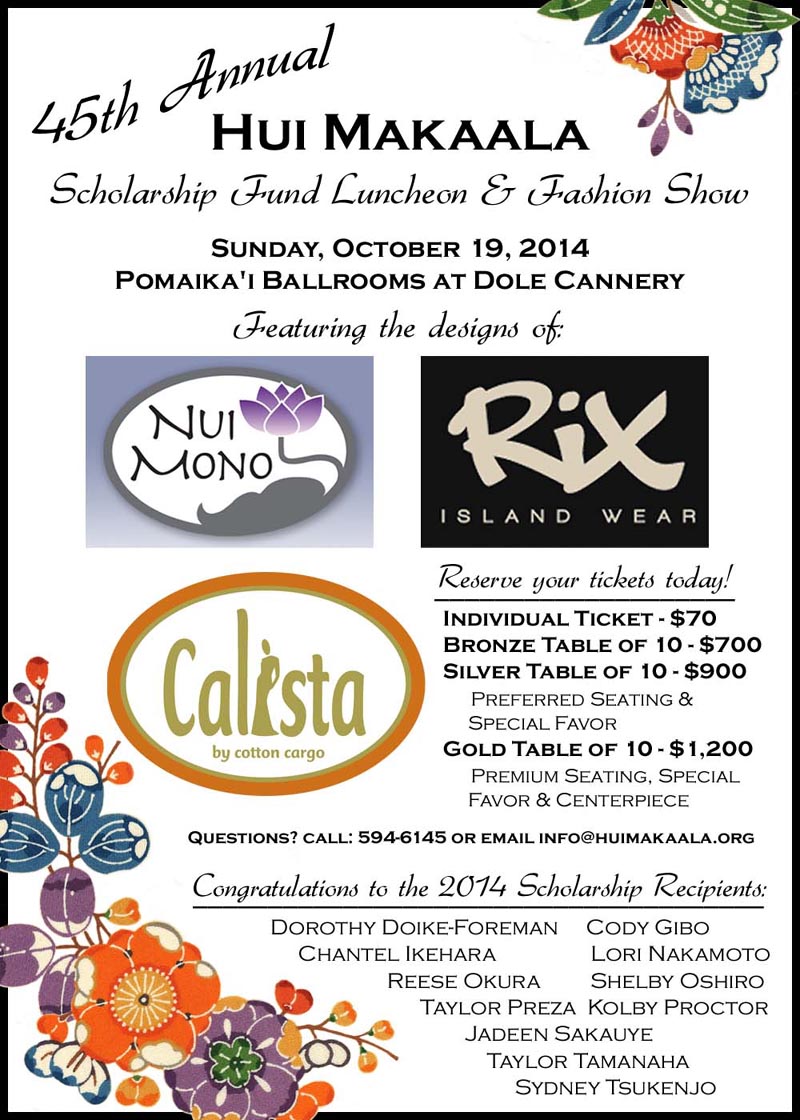
Click image to enlarge. Click here to go to the event site.
Sunday, October 19, 2014
Boutique Sales and Silent Auction – 9 am
Ballroom Doors open – 11:30 am
Lunch – Noon
Fashion Show – 1 pm
Pomaikai Ballrooms at Dole Cannery
(Parking in Dole Cannery, $6 with validation; Ballrooms located on 2nd floor)
Individual Tickets are $70 per person ($24 is tax deductible)
For the Reservation Form, Click Here.
Questions? / to get a reservation form mailed to you:
Email: info@huimakaala.org or call 594-6145 (Valerie)
Click image to enlarge.
Forwarded by Rodney Inefuku on 9/29/14
Click images to enlarge.

 | Anonymous on A Haunting Image from the Batt… |
 | loochoo77 on Where Is Haneji in Nago C… |
 | Rodney Inefuku on Where Is Haneji in Nago C… |
| loochoo77 on Haneji Community Center… |
 | Hiro on Haneji Community Center… |
 | Charlene Dierking on “Persevere”… |
 | sxintkxssidy on WWII Internees Weren’t A… |
| Anonymous on Rob Kajiwara: China – Ry… |
| Anonymous on Okinawan Proverbs in Uchi… |
| A Historic Clash of… on Marines Protecting Orphan… | |
| loochoo77 on Rob Kajiwara: China – Ry… |
| Anonymous on Rob Kajiwara: China – Ry… |
| loochoo77 on NYT: World War II Loot Found i… |
| loochoo77 on Rob Kajiwara: Do Okinawans loo… |
 UH Center for Okinawan Studies UHCOS-FB
 Chicago Okinawa Kenjinkai Chicago Okinawa Kenjinkai - FB Florida Okinawa Kenjinkai - FB Hui Makaala HUOA HUOA-FB HUOA Newsletter Jade's Escape Japan Daily Press: Okinawa Japan Times: Okinawa Japan Update: Okinawa Japanese American National Museum Map It! Okinawa Maui Ryukyu Culture Group Mick's Okinawa Scrapbook Music Events in Okinawa Nakasone Dance Academy Nikkei Chicago Oki-Ngo Okinawa.com Okinawa Assoc. of America Okinawa Assoc. of America - FB Okinawa Assoc. of Minnesota Okinawa Clip Okinawa Hai Okinawa Inst of Science & Technology Okinawa Island Guide Okinawa Kai of Washington D.C. Okinawa Kenjin Club Washington StateOkinawa Peace Appeal Okinawa Tomonokai of Ohio Okinawan at Heart Okinawaology Blog OkiNinjaKitty Videos Pigs from the Sea Power of Okinawa Remembering Okinawa Ryukyu Bugei Ryukyu Shimpo Sakamaki/Hawley Collection SF Okinawa Kenjin Kai UHM-Ryudai Student Exchange Program Ukwanshin Kabudan University of the Ryukyus Urthman’s Genealogy Blog WUBHawaii WYUA USA Young Okinawans of HI
 liuchiuan